Kids and beginners
Christian Beliefs for Kids: Simple Faith Lessons for Home and School
Short answer: Christian beliefs for kids can be explained simply: Christians believe God made and loves the world, Jesus shows what God is like, the Bible teaches Christians about God and how to live, prayer is talking with God, church is a worshiping community, and Christians try to love God and love other people.
Simple summary
- This page explains Christian beliefs in language useful for parents, teachers, church leaders, and young learners.
- Children can begin with God, Jesus, the Bible, prayer, church, forgiveness, kindness, and hope.
- Adults can explain differences among Christian traditions gently without asking children to carry adult debates too early.
Key points
- Christians believe God made the world and loves people.
- Christians believe Jesus shows God’s love and is central to Christian faith.
- The Bible is the special book Christians read in church, at home, and in study.
- Prayer can be explained as talking with God through thanks, help, praise, confession, and quiet listening.
- Church is a community where Christians worship, learn, serve, and care for one another.
- Christian values for children include love, forgiveness, kindness, honesty, courage, patience, generosity, and hope.
A Simple Explanation of Christianity for Kids
Christianity is a faith followed by many people around the world. Christians believe God made the world and loves people. They believe Jesus is very important because Jesus shows what God is like and teaches people to love God and love their neighbors. Christians read the Bible, pray, gather at church, sing, learn, help others, and try to live with kindness, forgiveness, honesty, and hope.
When explaining Christian beliefs for kids, simple words are best. A child does not need every historical debate at once. Start with a few clear ideas: God is loving and holy, Jesus is central, the Bible is the Christian Scripture, prayer is part of friendship with God, and Christians are called to love others. As children grow, adults can add words such as Trinity, grace, salvation, baptism, communion, and denomination.
Children also need honesty. Not every Christian church explains every topic in the same way. Catholic, Protestant, Orthodox, Baptist, Methodist, Lutheran, Presbyterian, Pentecostal, and Anglican Christians share many beliefs, but they may worship differently or explain baptism, communion, saints, church leadership, and the Bible in different ways. This can be explained calmly as church family differences.
A gentle explanation should avoid fear-based language. Topics like sin, heaven, hell, death, judgment, and forgiveness should be handled with care. Children can understand that Christians believe God wants people to choose good, ask forgiveness, and trust God’s love. They do not need frightening images or complicated arguments to begin learning.
Main Christian Beliefs for Kids
God made and loves the world
Christians believe God is the Creator. That means God made the world and cares about it. Christians also believe God is loving, wise, holy, and good. When teaching children, it can help to say that Christians believe God is not just a powerful idea, but the one who knows and loves people. Christians thank God for life, family, food, beauty, and help.
Jesus shows Christians what God is like
Christians believe Jesus is God’s Son and the Savior. They learn from his kindness, courage, teachings, miracles, death on the cross, and resurrection. Children can start with simple stories: Jesus welcomed children, helped sick people, forgave people, taught people to pray, and told people to love their neighbors.
The Bible is the Christian Scripture
The Bible is the book Christians read to learn about God, Jesus, prayer, wisdom, and Christian living. It has many kinds of writing, including stories, songs, teachings, letters, and prayers. The Bible can be read in children’s editions, story Bibles, church lessons, and family reading. Adults can explain later that Christians differ on some Bible details.
Prayer is talking with God
Prayer can be explained as talking with God. Children can pray to say thank you, ask for help, say sorry, praise God, or sit quietly. Christians pray at church, at meals, before bed, during hard days, and when they are thankful. Different churches use different prayers. Some use memorized prayers. Others use spontaneous words.
| Belief | Kid friendly explanation | Simple activity idea |
|---|---|---|
| God | Christians believe God made and loves the world. | Name three things to be thankful for. |
| Jesus | Christians believe Jesus shows God’s love. | Read a short Gospel story and ask what Jesus does. |
| Bible | The Bible is the special book Christians read and learn from. | Listen to a story and draw one scene. |
| Prayer | Prayer is talking with God. | Say thank you, help, sorry, or praise in one sentence. |
| Church | Church is a community that worships and learns together. | Name ways people can help each other at church. |
Christian Values Kids Can Understand
Christian values are not only ideas to memorize. They are ways Christians try to live. Love is the biggest word. Christians are taught to love God and love their neighbors. Neighbor does not only mean the person who lives next door. It means other people, including people who are different, lonely, hurting, or hard to understand.
Forgiveness is another important Christian value. Christians believe God forgives, and they try to forgive others. For children, forgiveness does not mean pretending something wrong did not happen. It means learning to tell the truth, say sorry, accept help, make things right when possible, and let go of revenge. Adults should explain forgiveness wisely, especially if a child has been hurt.
Honesty, kindness, courage, patience, generosity, and hope are also important. A child can practice honesty by telling the truth. Kindness by helping a classmate. Courage by doing what is right even when it is hard. Patience by waiting and listening. Generosity by sharing time or help. Hope by remembering that Christians believe God is with people in joyful and difficult times.
Christian beliefs for kids should connect values to the larger Christian story. Christians do not try to be kind only because kindness is useful. They believe love reflects God’s character and the teaching of Jesus. Children can learn that beliefs are not only things people say, but also ways people live.
How Different Christian Traditions Teach Children
Catholic children may learn through Mass, sacraments, prayers, saints, Bible stories, catechism classes, family devotions, and the church calendar. Catholic teaching often introduces children to baptism, Eucharist, confession, Mary, and the saints with age-appropriate language. Catholic families may use memorized prayers and seasonal practices.
Protestant children may learn through Sunday school, children’s church, Bible memory, songs, family devotions, sermons, youth programs, and service projects. Protestant churches differ. Baptist children may hear strong emphasis on personal faith and believer’s baptism. Methodist children may hear about grace and loving service. Lutheran children may learn catechism and sacraments. Pentecostal children may hear about the Holy Spirit and prayer.
Orthodox children may learn through the Divine Liturgy, icons, fasting seasons, feasts, prayers, saints, Scripture readings, and family participation in church life. Orthodox Christianity often teaches children through sight, sound, movement, repetition, and worship rather than only classroom explanation.
Anglican children may learn through Scripture, liturgy, prayer books, hymns, communion, the church year, and parish life. Some Anglican churches feel very traditional, while others feel more evangelical or informal. This variety is why adults can explain denominations as church families with both shared beliefs and differences.
Explaining Harder Christian Topics Gently
Some Christian topics are harder for children: sin, death, heaven, hell, judgment, suffering, and forgiveness after someone has been hurt. These topics should be explained with calm words and appropriate limits. A young child can understand that Christians believe people sometimes do wrong, God wants people to tell the truth, and forgiveness matters. Older children can gradually learn more about repentance, justice, mercy, and hope.
Adults should avoid using frightening images to force quick understanding. Christian teaching includes serious ideas, but it also includes God’s love, patience, mercy, and care for people who are afraid or confused. If a child asks about death or heaven, answer simply and honestly. If a child asks about hell, avoid dramatic descriptions and focus on the Christian belief that choices matter, God is just, and God calls people toward life with him.
Forgiveness also needs careful teaching. Children should learn to say sorry and forgive others, but they should not be taught that forgiveness means hiding harm, ignoring safety, or pretending everything is fine. A wise Christian explanation can hold together mercy, truth, protection, and accountability.
Age-appropriate teaching changes as children grow. A young child may need one sentence and a story. An older child may need definitions and examples. A teenager may be ready to compare denominations, ask difficult questions, and study Scripture more deeply. Good teaching respects the child’s stage while keeping the meaning accurate.
How to Keep Christian Beliefs Age Appropriate
Age-appropriate language does not mean watering everything down. It means choosing words a child can understand and adding detail as the child grows. For a young child, God made and loves the world is a good beginning. For an older child, adults can add that Christians believe God is Creator, holy, loving, just, merciful, and known as Father, Son, and Holy Spirit. For a teenager, the same topic can connect to creeds, denominations, and Bible interpretation.
The same pattern works for Jesus. A young child can learn that Jesus shows God’s love, welcomes children, teaches people, helps people, dies, and rises again. Older students can compare how churches explain salvation, baptism, communion, and worship. A teenager may be ready to ask why Christians disagree about some doctrines while still sharing belief in Jesus.
For prayer, a young child can say thank you, help, sorry, and praise. An older child can learn the Lord’s Prayer, psalms, silent prayer, confession, intercession, and worship prayers. For the Bible, young children can begin with stories. Older children can learn about the Old Testament, New Testament, Gospels, letters, poetry, and translation.
Good teaching grows with the learner. It keeps the meaning accurate while changing the level of detail. It also invites questions. Children often ask direct and honest questions, and adults do not need to pretend they know everything. A calm answer, a simple example, and a willingness to keep learning can be more helpful than a rushed explanation.
Using Christian Beliefs for Kids at Home, School, or Church
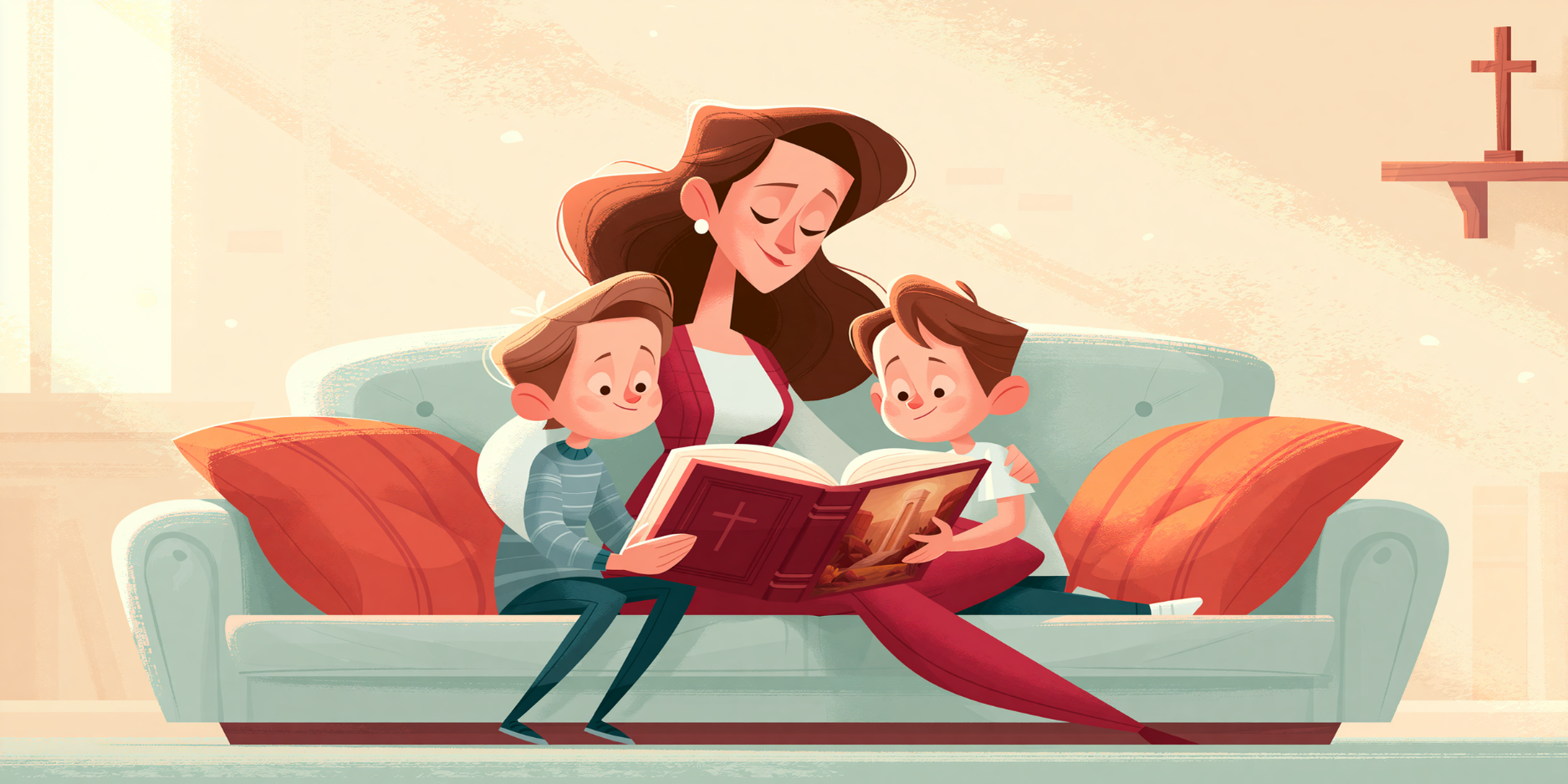
At home, read one short section and ask one simple question. What do Christians believe about God? What do Christians believe about Jesus? What is prayer? What is the Bible? What is church? Let the child answer in plain words before adding more. A calm conversation is usually better than a long lecture. Drawing, songs, short prayers, and examples from daily life can help the ideas become concrete.
In a classroom, this topic can become a neutral introduction to Christianity. Teachers can ask students to identify shared Christian beliefs and then notice that churches differ. A class can compare worship, prayer, Bible reading, service, and holidays without making fun of any tradition. Students can learn that religion can be studied with respect and accuracy.
In church settings, adults can adapt the wording to match their tradition while still teaching children to speak respectfully about other Christians. That respect matters. Children learn not only facts from adults, but also the tone adults use when describing people who worship differently.
Age Appropriate Christian Beliefs and Activity Ideas
Children learn best when explanations match their age and attention. This table helps parents and teachers keep Christian beliefs simple, accurate, and concrete without making the lesson childish for older students.
| Age group | How to explain the belief | Activity idea | Mistake to avoid |
|---|---|---|---|
| Preschool | God made the world, Jesus loves people, prayer is talking with God. | Draw creation, say a thank-you prayer, sing a simple song. | Using scary or abstract language too early. |
| Early elementary | Jesus teaches kindness, forgiveness, prayer, and love of neighbor. | Read a short Gospel story and name one kind action. | Turning every lesson into a rule list. |
| Older elementary | The Bible has stories, songs, teachings, and letters that Christians learn from. | Sort Bible examples into story, prayer, teaching, and wisdom. | Pretending all churches teach every detail the same way. |
| Middle school | Christians share core beliefs but belong to different church families. | Compare worship practices respectfully using a simple chart. | Mocking unfamiliar traditions or worship styles. |
| Teens | Christian belief includes doctrine, practice, history, questions, and real differences. | Discuss a belief, a practice, a tradition difference, and a question. | Giving slogans instead of thoughtful explanations. |
For a parent or teacher, the most useful question is often, “What can this child repeat accurately after the lesson?” A preschool child may repeat that God made the world. An older child may explain that Christians read the Bible to learn about God and Jesus. A teenager may compare why churches worship differently. Each answer can be true at its own level.
Adults can also make lessons more concrete by connecting belief with practice. A lesson about prayer can end with a one-sentence prayer. A lesson about forgiveness can include practicing a sincere apology. A lesson about church can include naming people who serve, sing, teach, welcome, and help. These simple actions keep Christian beliefs for kids from becoming abstract vocabulary.
Age-Level Teaching Chart
| Age group | Helpful wording | Activity idea | What to avoid |
|---|---|---|---|
| Preschool | God loves us, Jesus teaches love, and we can pray. | Simple songs, gratitude prayers, and kindness examples. | Fear-heavy explanations or abstract doctrine. |
| Early elementary | Christians learn from Jesus, the Bible, prayer, and church. | Bible story pictures, short prayers, and helping tasks. | Long debates about denominations. |
| Older elementary | Faith connects belief, worship, forgiveness, and daily choices. | Question cards, memory verses, and service projects. | Pretending every church explains all details the same way. |
| Middle school | Christian traditions share beliefs and may differ on practice. | Comparison charts and guided discussion. | Mocking unfamiliar churches. |
| Teen | Christian belief includes doctrine, practice, ethics, and community. | Short readings, reflection questions, and respectful comparison. | Oversimplifying hard topics. |
Gentle Wording for Hard Topics
Use language about wrong choices, needing forgiveness, and learning God’s way.
Speak calmly about grief, prayer, God’s love, and Christian hope without frightening details.
Say that churches may worship differently while many Christians still love Jesus and read the Bible.
Parent and Teacher Warning
Avoid fear-heavy explanations, denominational fights too early, or pretending every church teaches every detail the same way. Children need truthful language, but they also need explanations that match their age, emotional maturity, and ability to ask follow-up questions.
Conclusion: Christian Beliefs for Kids in Simple Words
Christian beliefs for kids can be explained with warmth and honesty. Christians believe God made and loves the world, Jesus shows God’s love and saves people, the Bible teaches Christians, prayer is talking with God, church is a worshiping community, and Christians try to live with love, forgiveness, kindness, courage, and hope.
The best teaching is clear, gentle, and connected to life. Children can learn Christian vocabulary without fear or pressure. They can ask questions, hear Bible stories, pray simple prayers, notice different church traditions, and practice love of neighbor in ways they understand.
Frequently asked questions
What are Christian beliefs for kids?
Christian beliefs for kids are simple explanations of what Christians believe about God, Jesus, the Bible, prayer, church, forgiveness, love, and hope. Children often need concrete examples before abstract doctrine. Parents and teachers can stay accurate by using simple words, avoiding fear-heavy explanations, and waiting to introduce denominational disagreements until the child is ready.
How do you explain God to a child?
You can say Christians believe God made the world, loves people, hears prayer, and wants people to live with love, honesty, and kindness. Children often need concrete examples before abstract doctrine. Parents and teachers can stay accurate by using simple words, avoiding fear-heavy explanations, and waiting to introduce denominational disagreements until the child is ready.
How do you explain Jesus to kids?
You can say Christians believe Jesus is God’s Son, shows God’s love, teaches people, helps people, dies on the cross, and rises again. Children often need concrete examples before abstract doctrine. Parents and teachers can stay accurate by using simple words, avoiding fear-heavy explanations, and waiting to introduce denominational disagreements until the child is ready.
How do you explain the Bible to kids?
You can say the Bible is the special book Christians read to learn about God, Jesus, prayer, wisdom, and how to live. Children often need concrete examples before abstract doctrine. Parents and teachers can stay accurate by using simple words, avoiding fear-heavy explanations, and waiting to introduce denominational disagreements until the child is ready.
How do you explain prayer to a child?
Prayer can be explained as talking with God by saying thank you, help, sorry, praise, or sitting quietly with God. Children often need concrete examples before abstract doctrine. Parents and teachers can stay accurate by using simple words, avoiding fear-heavy explanations, and waiting to introduce denominational disagreements until the child is ready. A beginner should notice both the shared belief and the way different traditions explain it in worship, teaching, and daily life.
Do all Christian churches teach kids the same way?
No. Christian churches share many beliefs, but Catholic, Protestant, Orthodox, and other traditions may teach children with different prayers, worship styles, and lessons. Children often need concrete examples before abstract doctrine. Parents and teachers can stay accurate by using simple words, avoiding fear-heavy explanations, and waiting to introduce denominational disagreements until the child is ready.
Should children learn about denominations?
Children can learn simple denomination language, such as church families that share belief in Jesus but worship and explain some teachings differently. Children often need concrete examples before abstract doctrine. Parents and teachers can stay accurate by using simple words, avoiding fear-heavy explanations, and waiting to introduce denominational disagreements until the child is ready.
How should adults explain sin to kids?
Adults can explain sin as choosing wrong, hurting others, or turning away from God, while also emphasizing truth, forgiveness, mercy, and growth. Children often need concrete examples before abstract doctrine. Parents and teachers can stay accurate by using simple words, avoiding fear-heavy explanations, and waiting to introduce denominational disagreements until the child is ready.
What Christian values are easiest for kids to understand?
Love, kindness, honesty, forgiveness, patience, courage, generosity, and hope are values children can understand through stories and daily examples. Children often need concrete examples before abstract doctrine. Parents and teachers can stay accurate by using simple words, avoiding fear-heavy explanations, and waiting to introduce denominational disagreements until the child is ready. A beginner should notice both the shared belief and the way different traditions explain it in worship, teaching, and daily life.
What is the easiest Christian belief for kids to remember?
A simple starting point is that Christians believe God loves people and teaches them to love God and love their neighbors. Children often need concrete examples before abstract doctrine. Parents and teachers can stay accurate by using simple words, avoiding fear-heavy explanations, and waiting to introduce denominational disagreements until the child is ready. A beginner should notice both the shared belief and the way different traditions explain it in worship, teaching, and daily life.
Sources and further reading
These sources are included for neutral background reading from official church, Bible, educational, or reference resources.