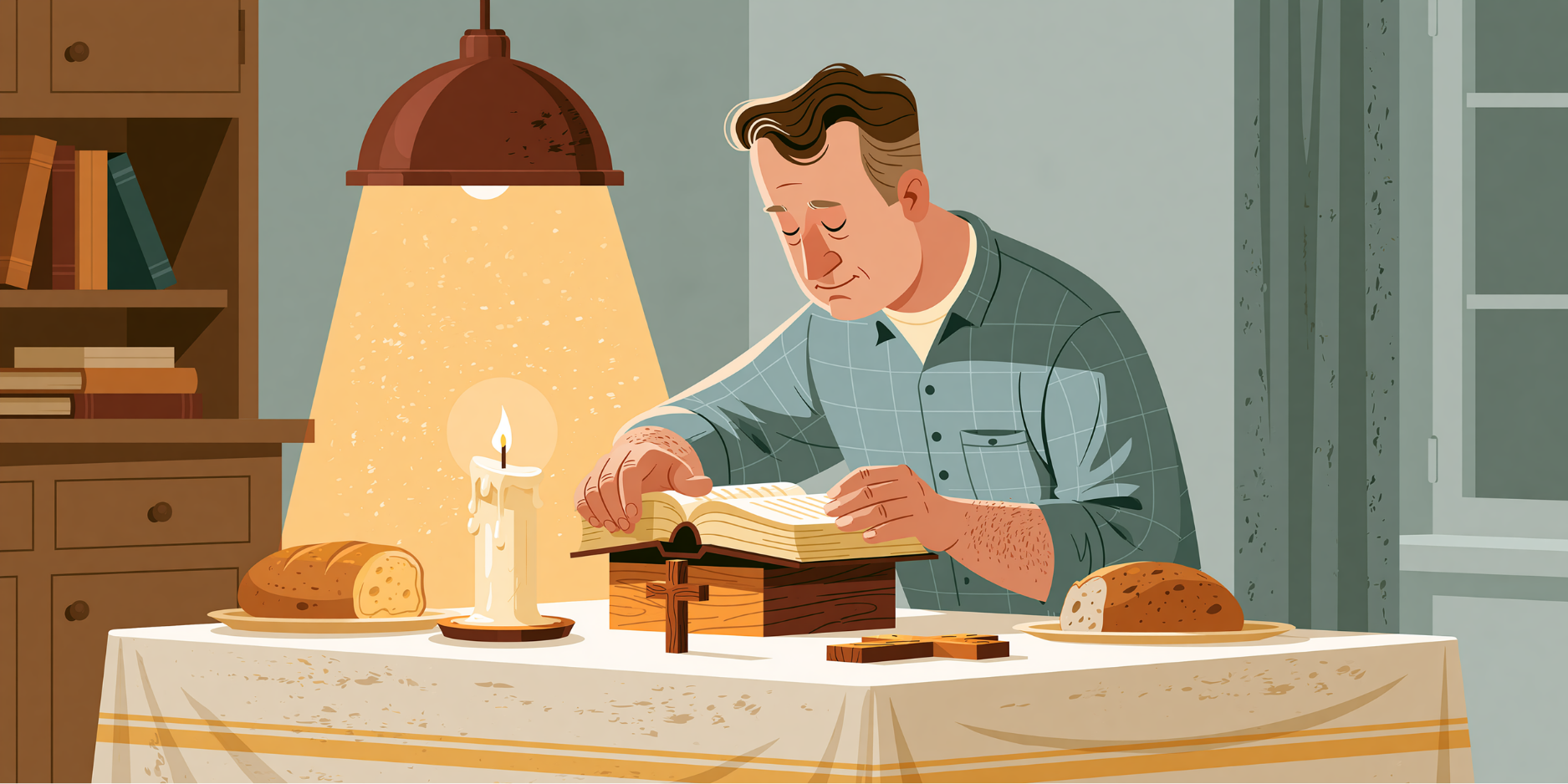
Five-belief guide
5 Basic Christian Beliefs Every Beginner Should Know
Short answer: The 5 basic Christian beliefs in this guide are belief in God, Jesus Christ, the Bible, salvation by grace, and Christian living. These five topics give beginners a simple structure for understanding Christianity while leaving room for differences between Catholic, Protestant, Orthodox, and other Christian traditions.
Simple summary
- This page focuses on exactly five basic Christian beliefs: God, Jesus Christ, the Bible, salvation by grace, and Christian living.
- The five beliefs are connected: Christians worship God, follow Jesus, read Scripture, receive grace, and practice faith in daily life.
- Traditions may add emphasis on sacraments, church authority, liturgy, spiritual gifts, or holiness.
Key points
- The five beliefs are a beginner framework, not the complete content of Christianity.
- Belief in God shapes worship, prayer, gratitude, and moral responsibility.
- Belief in Jesus Christ shapes salvation, discipleship, forgiveness, and Christian hope.
- Belief in the Bible shapes teaching, preaching, worship, and spiritual formation.
- Salvation by grace teaches that Christians depend on God’s mercy rather than self-rescue.
- Christian living connects belief with love, service, forgiveness, worship, and daily choices.
Why These 5 Basic Christian Beliefs Matter
The phrase 5 basic Christian beliefs is useful because beginners often need a short framework. Christianity includes many doctrines, practices, traditions, and debates. Starting with five beliefs keeps the first step clear: God, Jesus Christ, the Bible, salvation by grace, and Christian living.
These five beliefs are not random. They answer five beginner questions. Who do Christians worship? Why is Jesus central? What book shapes Christian teaching? How do Christians understand forgiveness and new life? How should Christians live? A reader who can answer those questions has a strong starting point.
The five beliefs also fit together. Christians believe God acts through Jesus Christ. The Bible tells the story and teaches the faith. Salvation by grace explains why forgiveness is a gift. Christian living shows how belief becomes practice. Leaving out one piece makes the picture weaker.
1. God
The first basic belief is God. Most Christians believe in one God who is Creator, holy, loving, just, merciful, and personal. Christians worship God, pray to God, give thanks to God, and seek to live before God. Historic Christianity also speaks of God as Father, Son, and Holy Spirit.
A beginner example is gratitude. Christians may thank God for life, food, family, beauty, help, and mercy. Gratitude is not only positive thinking. It grows from the belief that life is received from God. Another example is moral responsibility. Christians believe choices matter because people live before a holy and loving God.
Different traditions emphasize God in different ways. Eastern Orthodox Christianity often stresses mystery and worship. Catholic teaching speaks through Scripture, tradition, sacraments, and doctrine. Many Protestants emphasize God’s word, grace, sovereignty, and personal trust.
2. Jesus Christ
The second basic belief is Jesus Christ. Christians believe Jesus is the Christ, Son of God, Lord, Savior, crucified and risen. His teaching matters, but Christianity does not treat Jesus only as a moral teacher. Christians connect Jesus with God’s revelation, forgiveness, salvation, resurrection, and eternal hope.
A beginner example is the cross. Christians do not speak about the cross only because Jesus suffered. They connect it with love, sin, sacrifice, reconciliation, and grace. Another example is resurrection. Christians connect resurrection with hope that death does not have the final word.
Christian traditions may explain the work of Jesus with different theological terms. Some emphasize justification, others healing and transformation, others sacramental participation. Still, Jesus remains central across historic Christianity.
3. The Bible
The third basic belief is the Bible. Christians receive the Bible as sacred Scripture. It includes the Old Testament and New Testament, though traditions differ on some Old Testament books. Christians read Scripture in worship, preaching, study, prayer, teaching, and daily reflection.
A beginner example is hearing a Gospel reading in church. The reading is not only information about the past. Christians hear it as witness to Jesus and as teaching for faith and life. Another example is prayer. Psalms, Gospel stories, and New Testament letters often shape the language Christians use when they pray.
Christians differ on authority and interpretation. Many Protestants emphasize Scripture as final authority for doctrine. Catholic and Orthodox traditions read Scripture within the wider life of the church and tradition. These differences matter, but they do not remove the Bible’s central place.
4. Salvation by Grace
The fourth basic belief is salvation by grace. Many Christians believe human beings need forgiveness, healing, and restoration from God. Grace means God’s undeserved help and mercy. Salvation means God forgives, restores, and gives new life through Jesus Christ.
A beginner example is the difference between earning and receiving. Christians do not usually explain salvation as a person climbing up to God by moral effort alone. They speak about God’s mercy coming first. Christians then respond with faith, repentance, worship, love, and changed life.
Traditions differ on how grace, faith, works, sacraments, and holiness fit together. Many Protestants emphasize justification by faith. Catholic teaching speaks about grace, faith, love, sacraments, and cooperation with God. Eastern Orthodox Christianity often emphasizes healing and transformation.
5. Christian Living
The fifth basic belief is Christian living. Christians believe faith should shape life. Christian living includes prayer, worship, forgiveness, generosity, honesty, service, humility, love of neighbor, and hope. It is not only behavior management. It grows from beliefs about God, Jesus, grace, and the Holy Spirit.
A beginner example is forgiveness. Christians believe God forgives, so they are called to forgive others. This does not mean hiding harm or avoiding justice. It means rejecting revenge and seeking truth, mercy, accountability, and reconciliation where possible.
Another example is service. Christians believe people matter to God, so serving neighbors matters. Service can include giving, hospitality, care for the poor, visiting the lonely, teaching children, or helping in a local church. Christian living is belief made visible.
The 5 Basic Christian Beliefs in a Simple Table
| Belief | Simple Explanation | Beginner Example | Common Misunderstanding |
|---|---|---|---|
| God | Christians worship one Creator who is holy, loving, just, and merciful. | Thanking God in prayer. | Thinking God is only a vague force. |
| Jesus Christ | Jesus is central to salvation, forgiveness, and hope. | Connecting the cross with grace. | Treating Jesus only as a moral teacher. |
| The Bible | The Bible is sacred Scripture for Christian faith. | Reading a Gospel story in worship. | Thinking the Bible is only a rule book. |
| Salvation by Grace | God forgives and restores by mercy, not human self-rescue. | Confessing sin and trusting God’s mercy. | Thinking grace means choices do not matter. |
| Christian Living | Faith shapes prayer, worship, love, service, and forgiveness. | Serving a neighbor or forgiving someone. | Reducing Christianity to good manners. |
How These Five Beliefs Fit Together
The five beliefs fit together like a simple map. God is the one Christians worship. Jesus Christ reveals God and brings salvation. The Bible gives the story, language, and teaching of Christian faith. Salvation by grace explains why forgiveness is a gift. Christian living shows what faith looks like in practice.
If a reader separates these beliefs too much, Christianity becomes distorted. Christian living without grace can become moral pressure. Grace without Christian living can become vague. Bible reading without Jesus can miss the center. Belief in Jesus without worship of God becomes incomplete. The five beliefs support one another.
What Different Traditions May Add or Emphasize
| Tradition | Possible Emphasis | Important Caution |
|---|---|---|
| Catholic | Sacraments, Mass, Church authority, saints, moral formation. | Do not describe Catholic faith as works without grace. |
| Eastern Orthodox | Liturgy, icons, mystery, sacraments, spiritual healing. | Do not reduce Orthodoxy to customs or ethnicity. |
| Lutheran | Justification by faith, Word and sacrament, Law and Gospel. | Do not assume all Protestants explain sacraments the same way. |
| Baptist | Personal faith, believer’s baptism, preaching, local church. | Do not assume Baptist means all evangelical churches. |
| Methodist | Grace, holiness, discipleship, service, mission. | Do not treat practical faith as shallow theology. |
| Pentecostal | Holy Spirit, spiritual gifts, prayer, mission, expressive worship. | Do not reduce Pentecostal faith to emotion. |
These emphases do not replace the five basic beliefs. They show how Christian communities develop patterns of worship, teaching, and practice around the shared foundation.
Beginner Examples for Understanding Five Basic Christian Beliefs
One useful way to study 5 basic Christian beliefs is to connect each teaching with something a reader can observe. If the topic is God, look for prayer, praise, thanksgiving, and moral responsibility. If the topic is Jesus Christ, listen for how Christians speak about the cross, resurrection, forgiveness, and hope. If the topic is the Bible, notice how Scripture is read in worship, quoted in teaching, and used in personal study.
Another beginner example is a church visit. A visitor may see people sing, pray, listen to Scripture, hear preaching, celebrate baptism, receive communion or Eucharist, give offerings, or greet one another. Those actions are not isolated customs. They are practices connected to Christian beliefs about God, Jesus, grace, community, and daily life. Different traditions may arrange those practices differently, but the connection between belief and practice remains important.
A third example is a family or classroom discussion. Someone might ask why Christians pray before meals, why churches use different Bible translations, why some Christians baptize infants, why communion is treated with special reverence, or why denominations have different names. These questions are not distractions. They are often the doorway into understanding 5 basic Christian beliefs in a more concrete and careful way.
Careful Wording for Five Basic Christian Beliefs
Careful wording matters when explaining 5 basic Christian beliefs. Some beliefs are widely shared across Catholic, Orthodox, and many Protestant traditions. Other beliefs are explained differently by denomination, region, or local church. A clear article should say many Christians believe, most Christians believe, Catholic teaching says, many Protestants believe, Eastern Orthodox Christianity teaches, or some denominations differ when accuracy requires it.
For example, it is safer to say many Christians believe the Bible is sacred Scripture than to say every Christian uses the Bible in exactly the same way. It is safer to say Christians practice baptism widely than to say all Christians explain baptism the same way. It is safer to say many Christians believe in heaven, hell, resurrection, and final judgment than to claim every tradition describes the afterlife with the same details.
Careful wording is not hesitation. It is honesty. It helps students, parents, new believers, and curious readers learn without being misled by overbroad claims. It also avoids turning one denomination’s teaching into the definition of all Christianity.
Common Confusions About Five Basic Christian Beliefs
Many readers misunderstand 5 basic Christian beliefs because they hear one sentence without context. A short claim may be partly true but still misleading. The table below gives a cleaner way to think about common confusions.
| Confusing claim | Clearer beginner explanation | Why the difference matters |
|---|---|---|
| Christians all explain this the same way. | Many Christians share central beliefs, but traditions differ on authority, sacraments, worship, and interpretation. | It prevents overgeneralizing from one church experience. |
| Christianity is only rules. | Christian teaching includes moral formation, but it begins with God, Jesus Christ, grace, worship, and hope. | It keeps doctrine, practice, and daily life connected. |
| Differences mean there is no shared faith. | Many Christians share major beliefs while disagreeing on important details. | It avoids both exaggerating and minimizing differences. |
| A worship style proves the whole theology. | Worship style may show a tradition’s habits, but doctrine and authority need separate explanation. | It keeps readers from judging only by music, clothing, or building style. |
| One local church represents all Christians. | A local congregation may reflect denomination, culture, leadership, and community history. | It encourages fair comparison and better questions. |
What Five Basic Christian Beliefs Looks Like in Real Life
In real life, 5 basic Christian beliefs appears in ordinary practices. A person may hear Scripture read aloud, watch a baptism, see people receive communion or Eucharist, listen to a sermon, join a prayer, or notice how a church cares for children, visitors, the sick, and the poor. Those moments show how belief becomes visible.
A beginner can learn by asking simple observation questions. What is repeated in the service? What words are used for God and Jesus? How is the Bible treated? Is the worship formal, informal, quiet, expressive, sacramental, preaching-centered, or a mixture? How does the community practice forgiveness, generosity, teaching, and care?
These questions are useful because Christianity is learned through both explanation and practice. A written statement may describe a belief, but worship shows how the belief is prayed. A table may summarize differences, but a church service shows how those differences feel. A classroom definition may explain grace, but confession, forgiveness, and service show why grace matters.
This kind of observation also helps families and students. A parent can ask a child what they noticed about prayer or kindness. A student can compare what a source says with what a church actually does. A new believer can write down which words are repeated in worship. These small practices turn a broad topic into understandable steps.
For example, if a reader hears the words grace, mercy, and forgiveness several times in a service, that repetition is a clue about what the community values. If Scripture is read before the sermon, that shows how teaching is connected to the Bible. If people serve food, visit the sick, or give to local needs, that shows how belief can move into neighbor love.
The goal is not to judge every church quickly. The goal is to understand 5 basic Christian beliefs with enough patience to notice the shared Christian center, the tradition-specific details, and the everyday practices that make belief concrete.
How the Five Beliefs Connect
Christians begin with the Creator who is worthy of worship and trust.
Jesus reveals God and stands at the center of salvation and hope.
Scripture gives the story, teaching, and vocabulary of Christian faith.
God forgives and restores through mercy rather than human self-rescue.
Faith becomes visible in prayer, worship, service, forgiveness, and love.
Conclusion: 5 Basic Christian Beliefs
The 5 basic Christian beliefs in this guide are God, Jesus Christ, the Bible, salvation by grace, and Christian living. These five topics give beginners a clear way to understand Christianity without becoming lost in every denomination difference at once.
The five beliefs are simple enough to introduce clearly and deep enough to keep studying. Christian traditions may add different emphases, but these topics remain a helpful starting framework for students, parents, new believers, and curious readers.
Frequently asked questions
What are the 5 basic Christian beliefs?
The 5 basic Christian beliefs in this guide are God, Jesus Christ, the Bible, salvation by grace, and Christian living. This page intentionally keeps the list to five beliefs. It gives beginners a focused first framework without trying to cover every Christian doctrine, practice, or denominational difference at once. A beginner should notice both the shared belief and the way different traditions explain it in worship, teaching, and daily life.
Why are these five beliefs important?
They answer beginner questions about who Christians worship, why Jesus matters, what Scripture is, how salvation is understood, and how Christians live. This page intentionally keeps the list to five beliefs. It gives beginners a focused first framework without trying to cover every Christian doctrine, practice, or denominational difference at once. A beginner should notice both the shared belief and the way different traditions explain it in worship, teaching, and daily life.
Do all Christians agree on these five beliefs?
Many Christians share these broad themes, but traditions differ on details such as authority, sacraments, interpretation, and worship. This page intentionally keeps the list to five beliefs. It gives beginners a focused first framework without trying to cover every Christian doctrine, practice, or denominational difference at once. A beginner should notice both the shared belief and the way different traditions explain it in worship, teaching, and daily life.
What do Christians believe about God?
Most Christians believe God is Creator, holy, loving, just, merciful, personal, and worthy of worship. This page intentionally keeps the list to five beliefs. It gives beginners a focused first framework without trying to cover every Christian doctrine, practice, or denominational difference at once. A beginner should notice both the shared belief and the way different traditions explain it in worship, teaching, and daily life.
Why is Jesus one of the five basic beliefs?
Jesus is central because Christians connect him with God’s revelation, forgiveness, salvation, resurrection, and hope. This page intentionally keeps the list to five beliefs. It gives beginners a focused first framework without trying to cover every Christian doctrine, practice, or denominational difference at once. A beginner should notice both the shared belief and the way different traditions explain it in worship, teaching, and daily life.
Why is the Bible included?
The Bible is sacred Scripture and shapes Christian teaching, worship, prayer, and moral reflection. This page intentionally keeps the list to five beliefs. It gives beginners a focused first framework without trying to cover every Christian doctrine, practice, or denominational difference at once. A beginner should notice both the shared belief and the way different traditions explain it in worship, teaching, and daily life.
What does salvation by grace mean?
It means Christians depend on God’s mercy and help rather than saving themselves by effort alone. This page intentionally keeps the list to five beliefs. It gives beginners a focused first framework without trying to cover every Christian doctrine, practice, or denominational difference at once. A beginner should notice both the shared belief and the way different traditions explain it in worship, teaching, and daily life.
What is Christian living?
Christian living is faith expressed through prayer, worship, love, forgiveness, service, honesty, and hope. This page intentionally keeps the list to five beliefs. It gives beginners a focused first framework without trying to cover every Christian doctrine, practice, or denominational difference at once. A beginner should notice both the shared belief and the way different traditions explain it in worship, teaching, and daily life.
Sources and further reading
These sources are included for neutral background reading from official church, Bible, educational, or reference resources.